Anyflow
How I built an MVP from scratch that streamlined manual processes, reduced developer cognitive load, and secured $10,000 in funding from XDC Latam.
My Role
Product Designer & Founding Designer. (Solely responsible for the end-to-end creation of the MVP)
- Research
- UX/UI
- Visual Identity
- Initial Design System
Team
- 1 CTO
- 3 Software Engineers
- 1 Product Designer
Duration
4 months · 2024
Industry
Web3 · Developer Tools (B2B)
Platform
Web app · Desktop
The Impact
I reduced the deployment process from 60 to 5 minutes delivering the MVP that secured $10,000 in funding from XDC Latam.
Highlights
- Abstraction of technical complexity: Translated a complex Web3/DevOps flow into a linear, low-cognitive-load interface with GitHub login, clear steps, and visual status trackers.
- Pragmatic MVP scope: Condensed the flow into 4 main screens, a conscious trade-off negotiated with engineering to speed up delivery without compromising the experience.
- End-to-End Ownership: Sole designer from discovery to high-fidelity handoff: research, UX/UI, visual identity, and initial design system.
Organizational Context
- Product Strategy: defined by the founders: quickly proving an MVP that simplified multichain deployment and reduced developer cognitive load
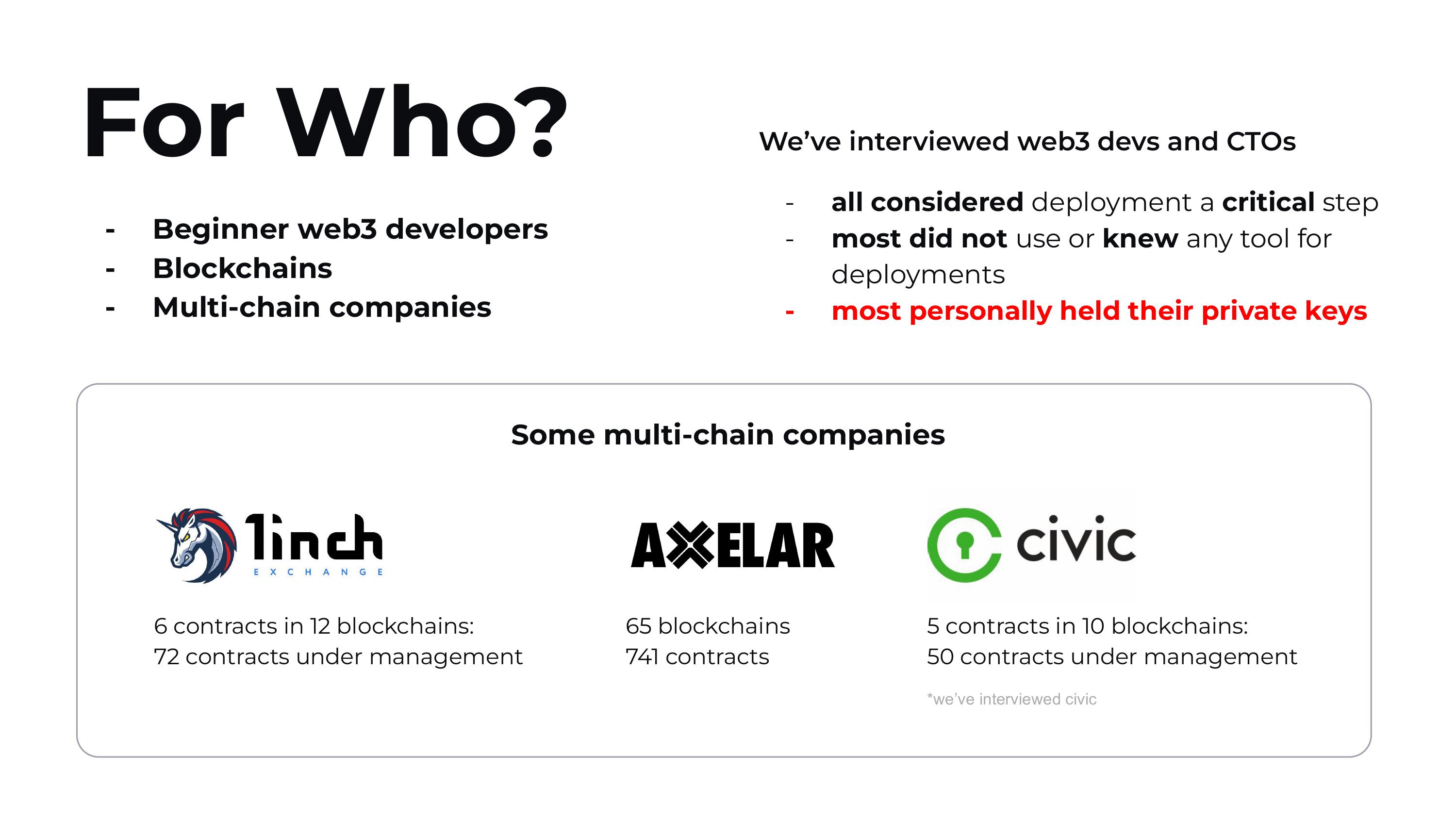
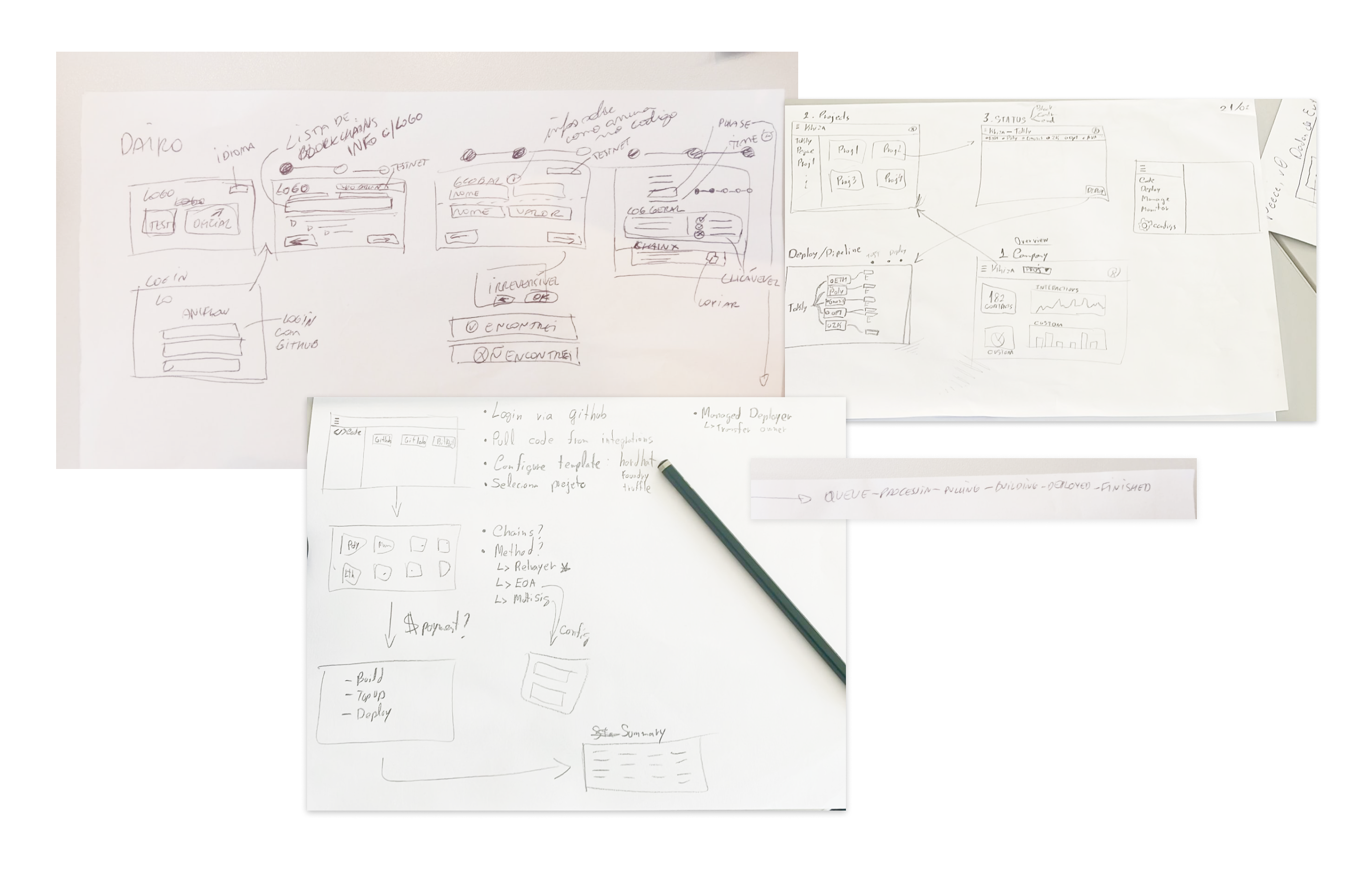
- Discovery & UX Research: a technical, unprecedented product with few market references; I ran discovery mapping developers' pain points and profiles, with decisions guided by operational efficiency and validation with the founders
- Processes: a fast-paced, remote blockchain venture studio; sole designer from concept to launch
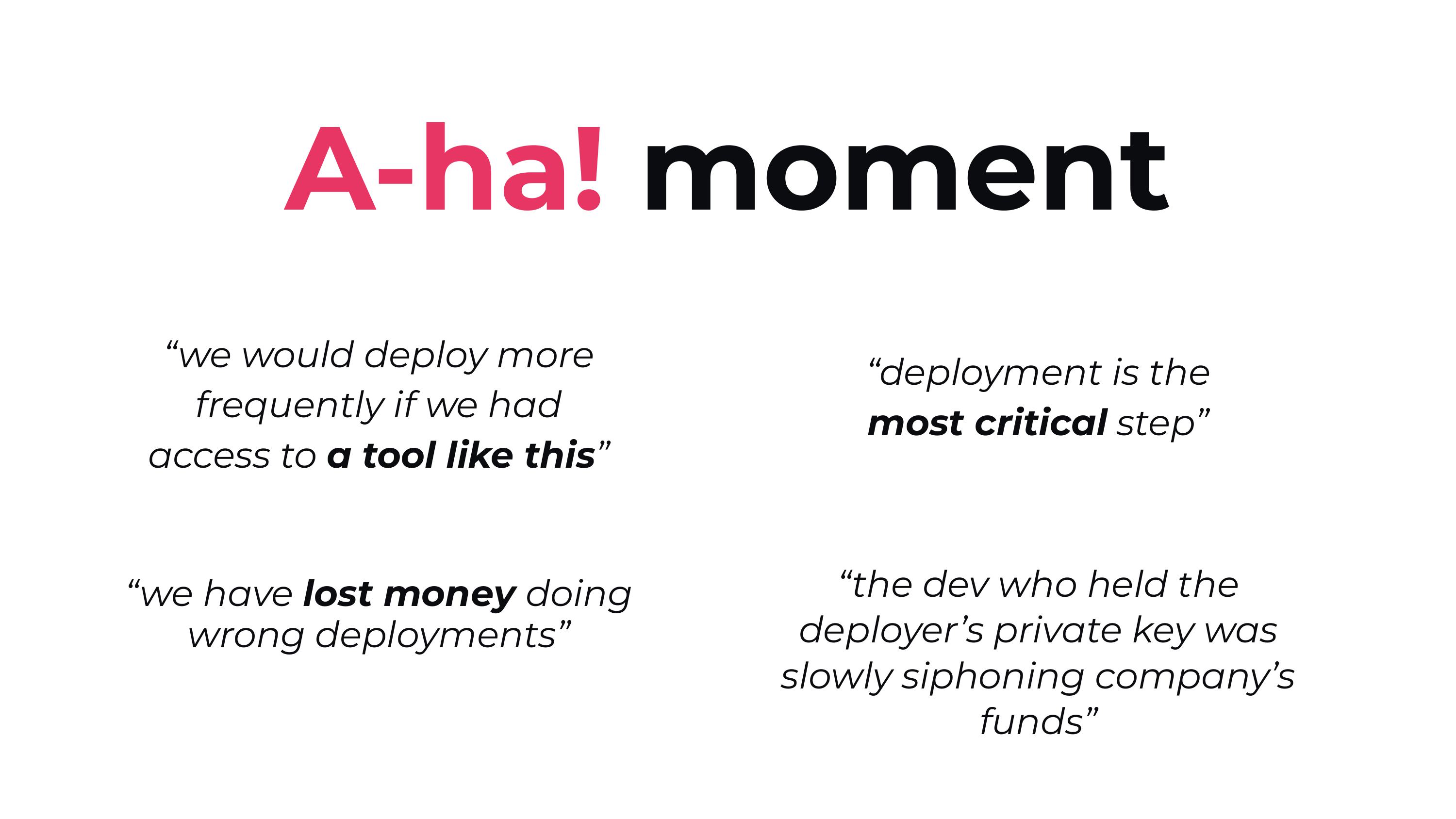
Web3 deployment demanded over 60 minutes, 10 manual steps, and deep technical knowledge, a process prone to critical errors.
Deploying a Web3 project was a manual, repetitive process prone to critical errors. It required deep technical knowledge, high barriers to entry, and financial fragmentation.
To illustrate a real-world developer scenario, the standard deployment flow required:
- Time: Over 60 minutes.
- Complexity: 10 mandatory and manual steps (such as installing tools, registering RPC providers, registering API keys, and funding deployment accounts).
- Financial Barrier: The need to purchase specific tokens via exchanges before even starting.
(Note: Scaling this to multiple blockchains multiplied the problem exponentially).
Times and steps estimated from the standard flow mapped in interviews with developers and CTOs, and validated with the engineering team.
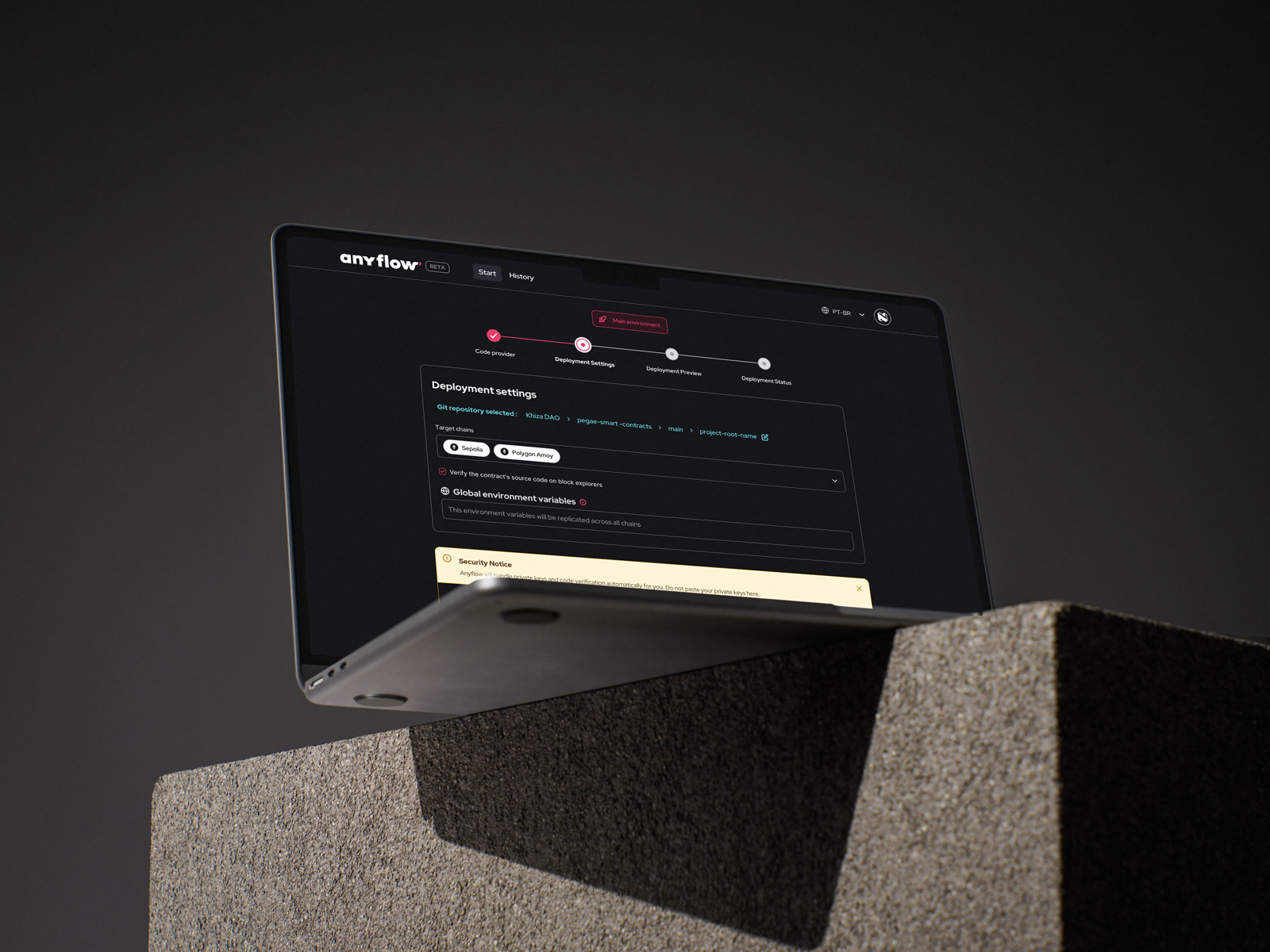
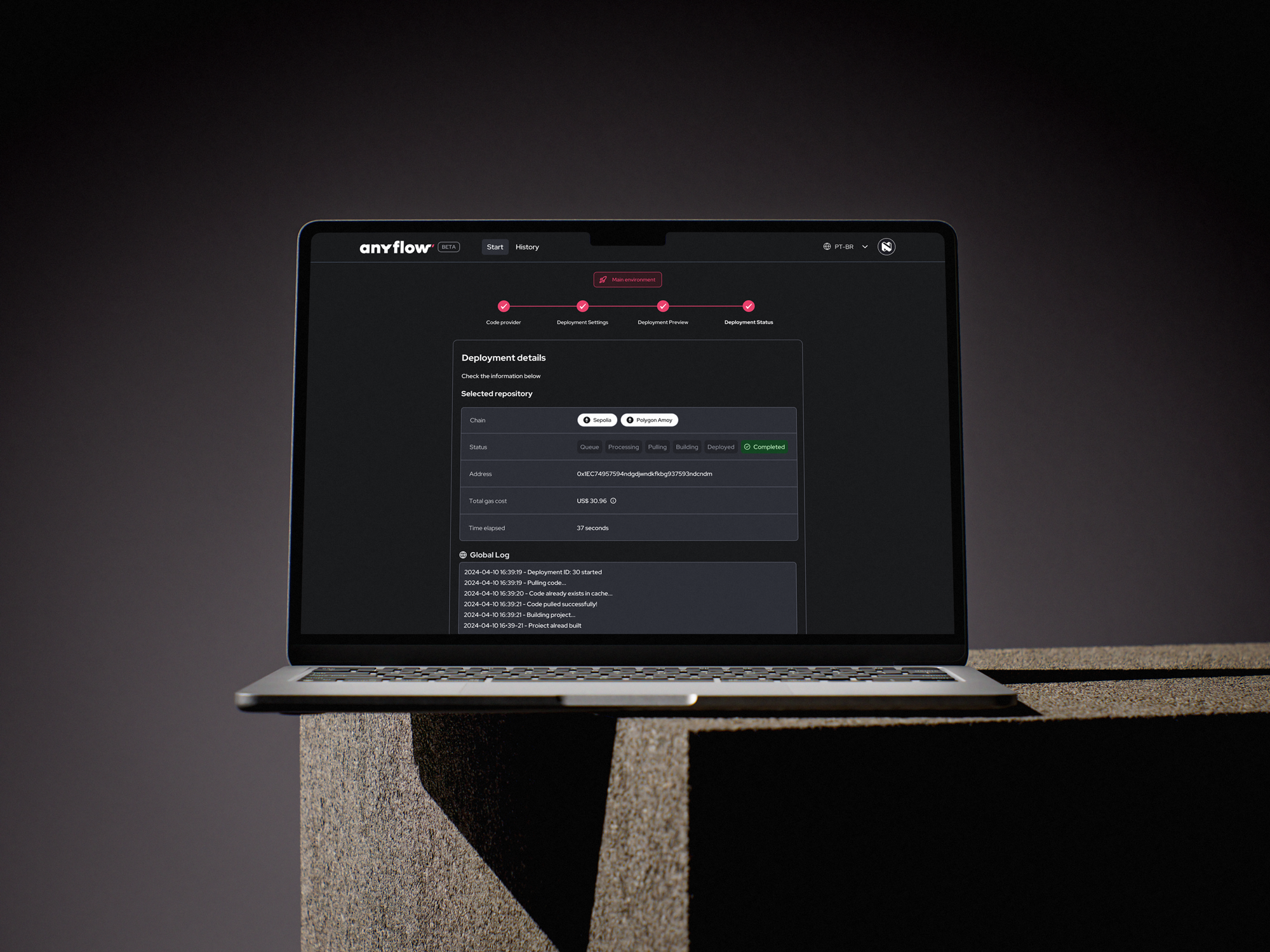
Anyflow: a smart contract automation and deployment platform for the Web3 ecosystem, focused on technical leaders and solo developers.
Created to fill the DevOps gap in the Web3 ecosystem, the product started at the MVP stage with a clear goal: to validate the viability of a multichain tool that would drastically reduce the time to publish applications on the blockchain. The delivery was validated and funded through a grant from XDC Latam.
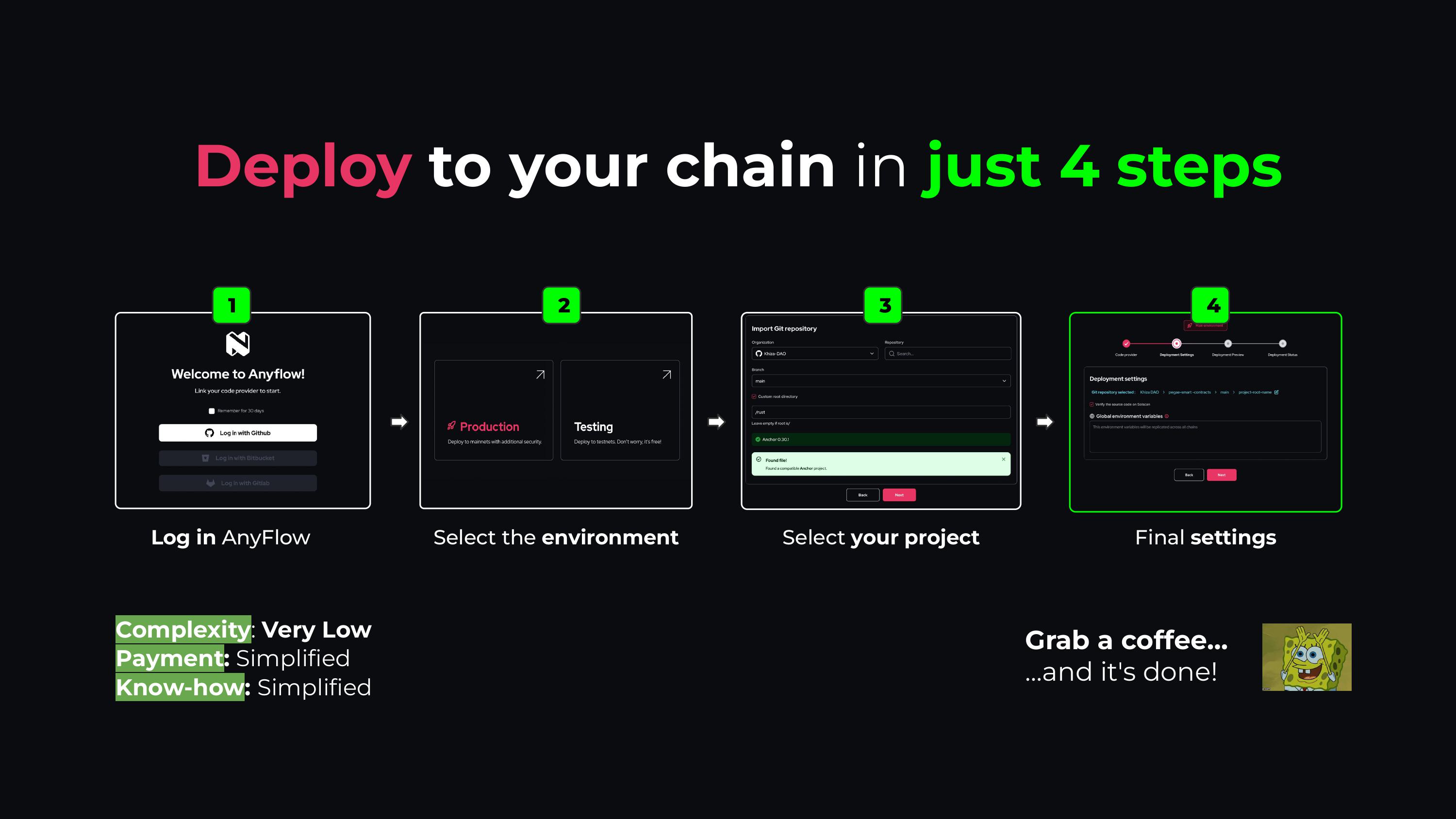
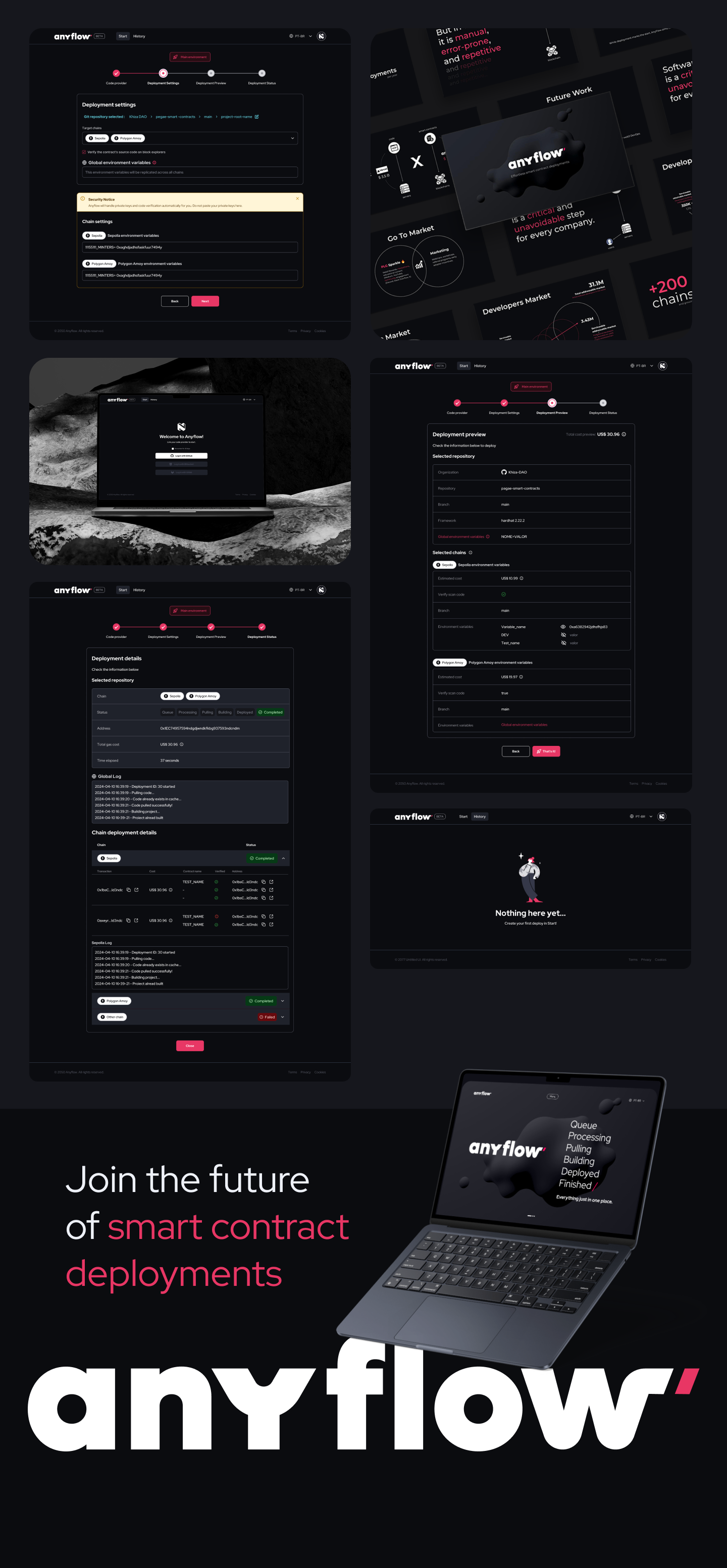
Deploy in 4 steps: we turned a technical tangle into a linear 5-minute flow. Payments were unified and the technical know-how was abstracted away by the system:
- Log in: Quick authentication via GitHub.
- Select Environment: A clear choice between "Production" (extra security) or "Testing" (free).
- Select Project: Direct import from the Git repository.
- Final Settings: Variable configuration and visual tracking of the deploy.
Since the goal was to deliver the MVP quickly for validation and fundraising, the "ideal UX scenario" gave way to pragmatism focused on engineering and business needs:
Fewer screens, faster delivery: In a scenario with unlimited time and resources, I would have broken the flow down into micro-steps to minimize cognitive load. Given the MVP reality, I condensed complex actions into just four main screens. This accelerated the development team's delivery without compromising the user experience.
Frictionless GitHub login: I implemented direct GitHub login, eliminating a tedious onboarding step and instantly connecting the user to their repository.
Separate Production & Test environments: Developers think in terms of "Production" and "Test." I created two separate environments from the start, using clear visual cues to prevent catastrophic errors during navigation.
Visible deploy status, hidden complexity: Although Anyflow automates dozens of background processes, I kept only the essential variables visible across the four steps. However, on the final screen, I designed a visual status tracker so the user knows exactly which stage each deployment is in (success or failure). Control remains in the developer's hands.
Deployment history for quick auditing: I added a simple deployment history screen, ensuring users could quickly review and audit their past actions in both environments.
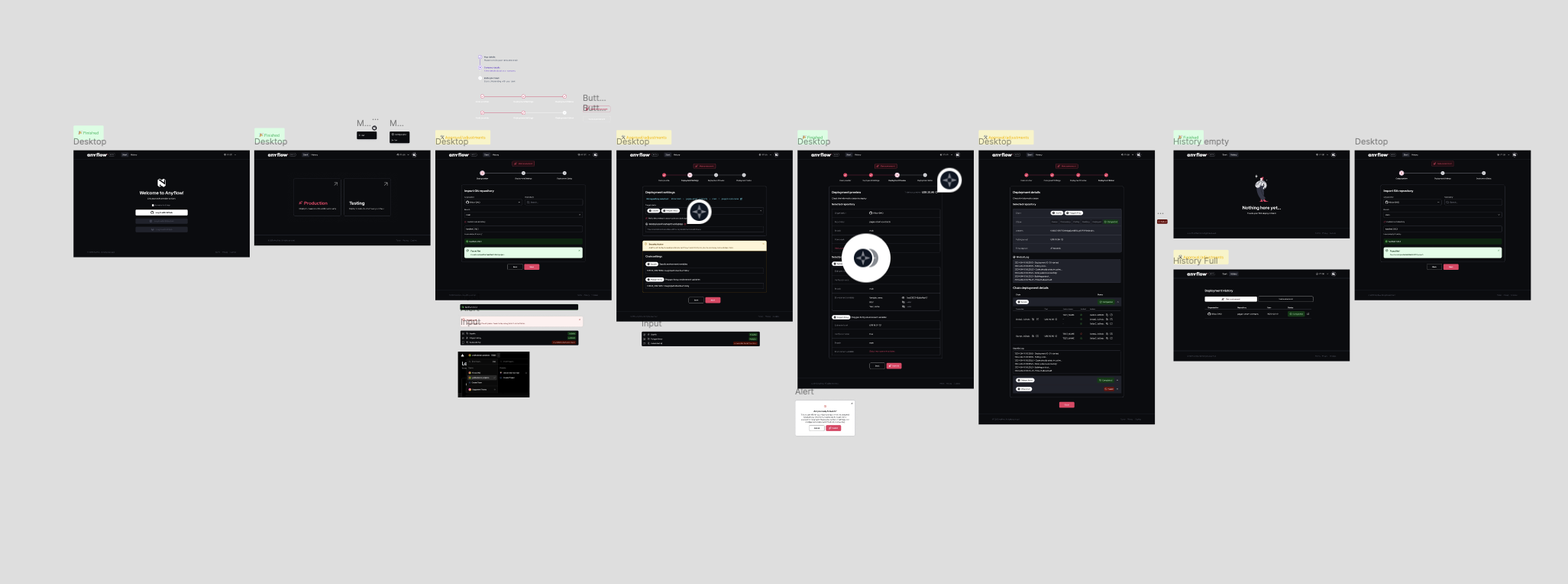
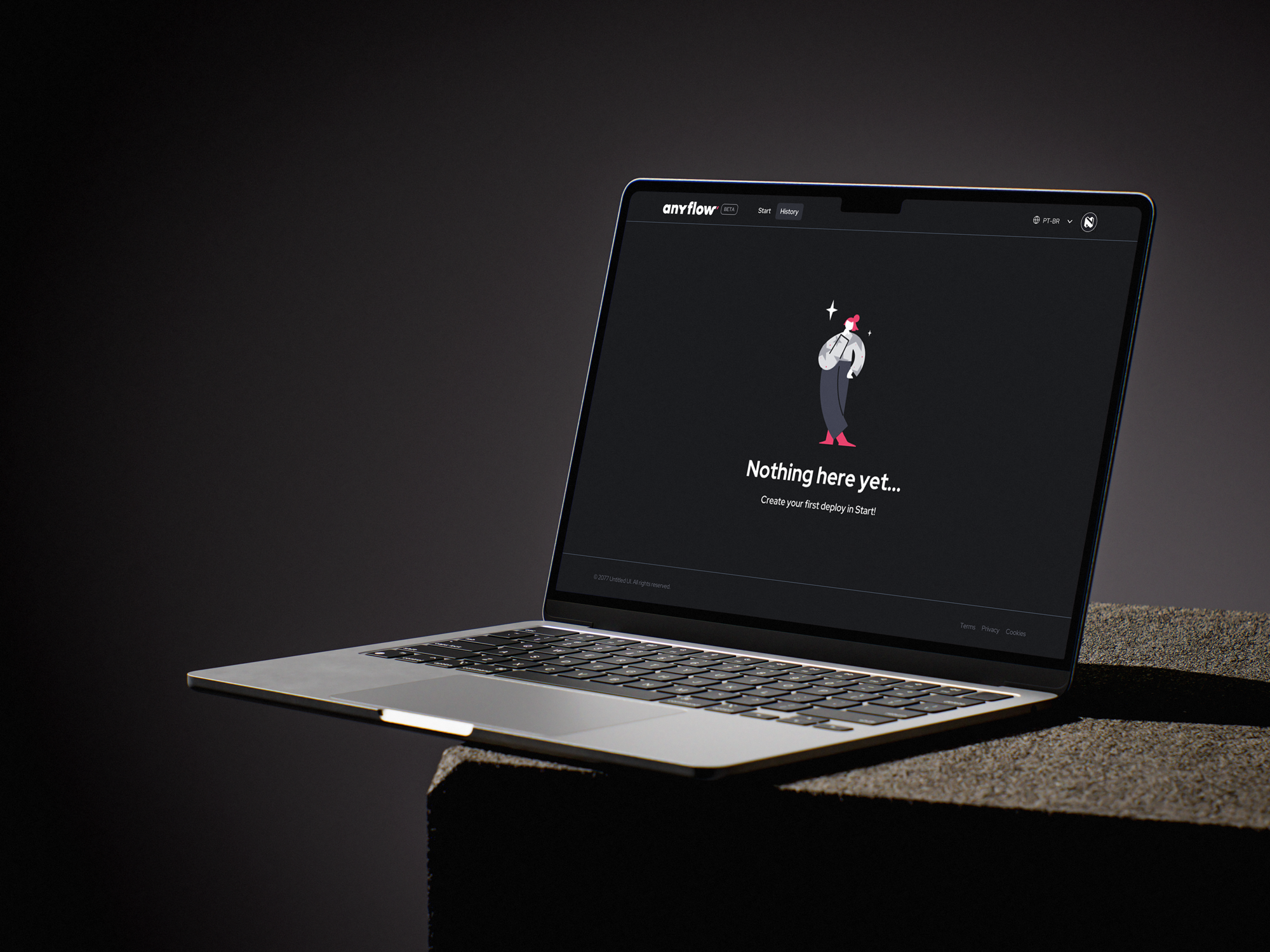
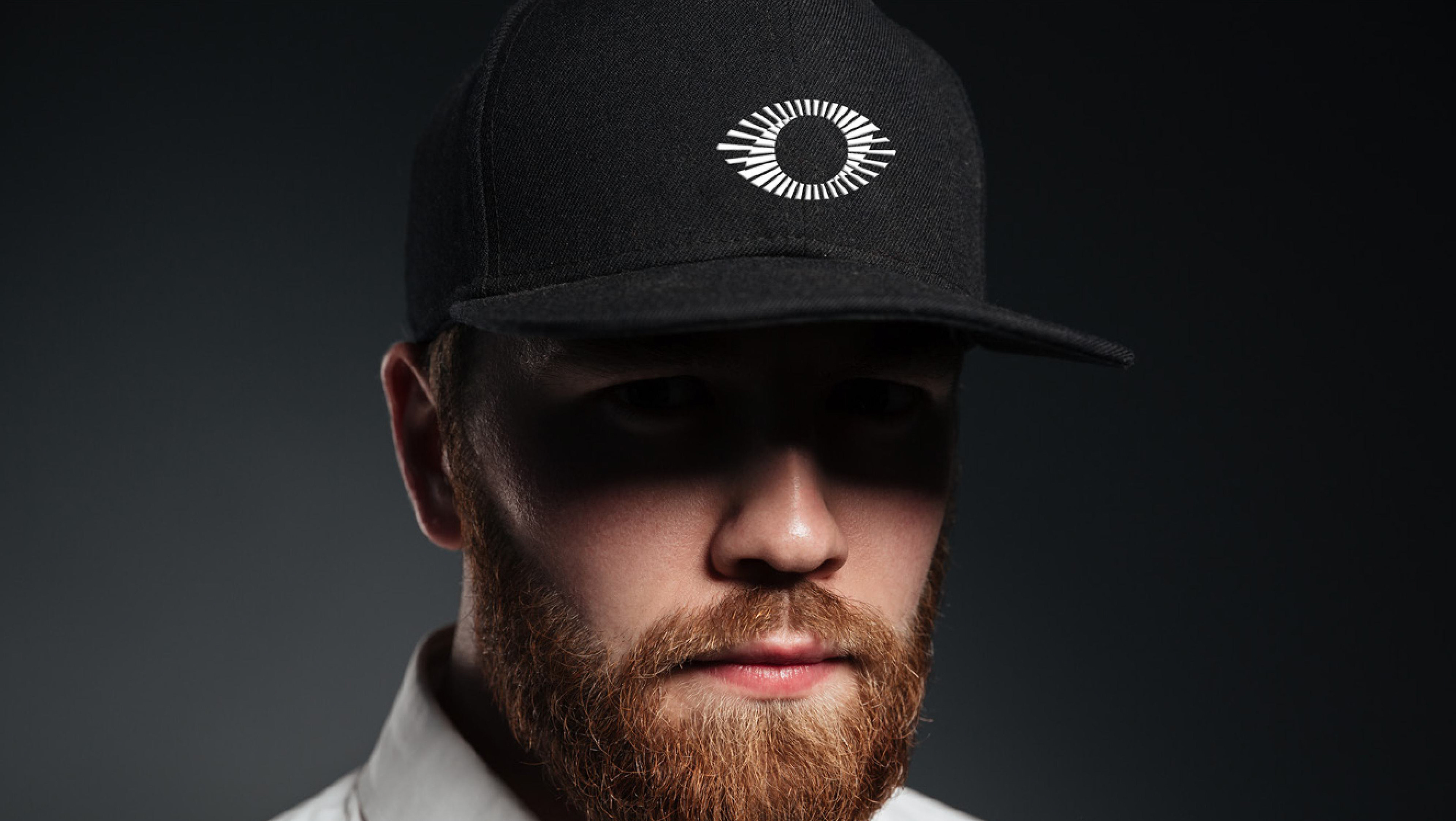
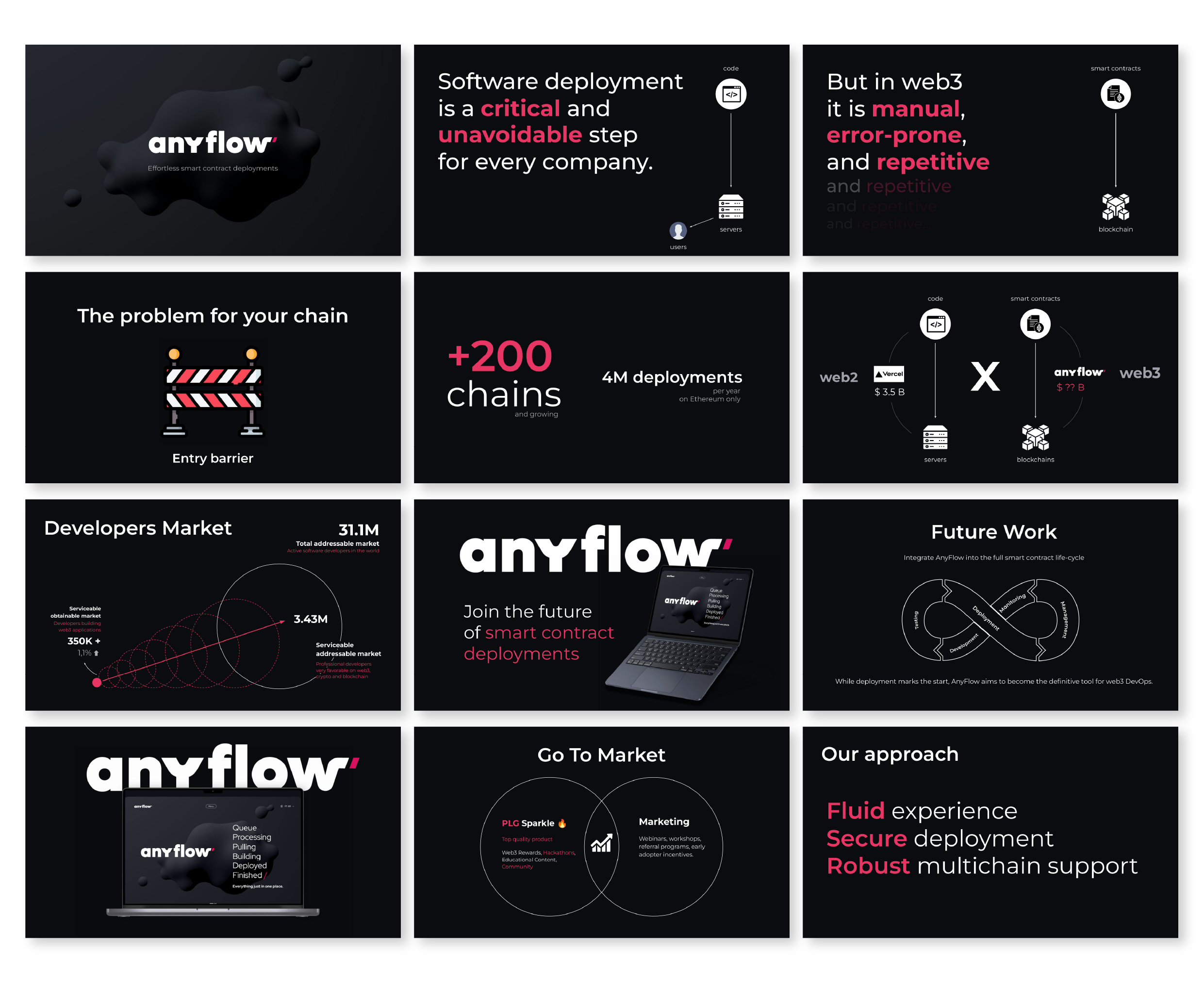
Beyond the product, I created the visual identity from scratch. I chose black as the dominant color because it's the natural territory of people who code. Dark mode is the near-unanimous preference of the developer profile, and the interface needed to feel like part of their working environment, not a break from it. To balance the technical weight, I created illustrations that bring lightness and convey a sense of ease and simplicity in the process, exactly the opposite of the pain that motivated the product.
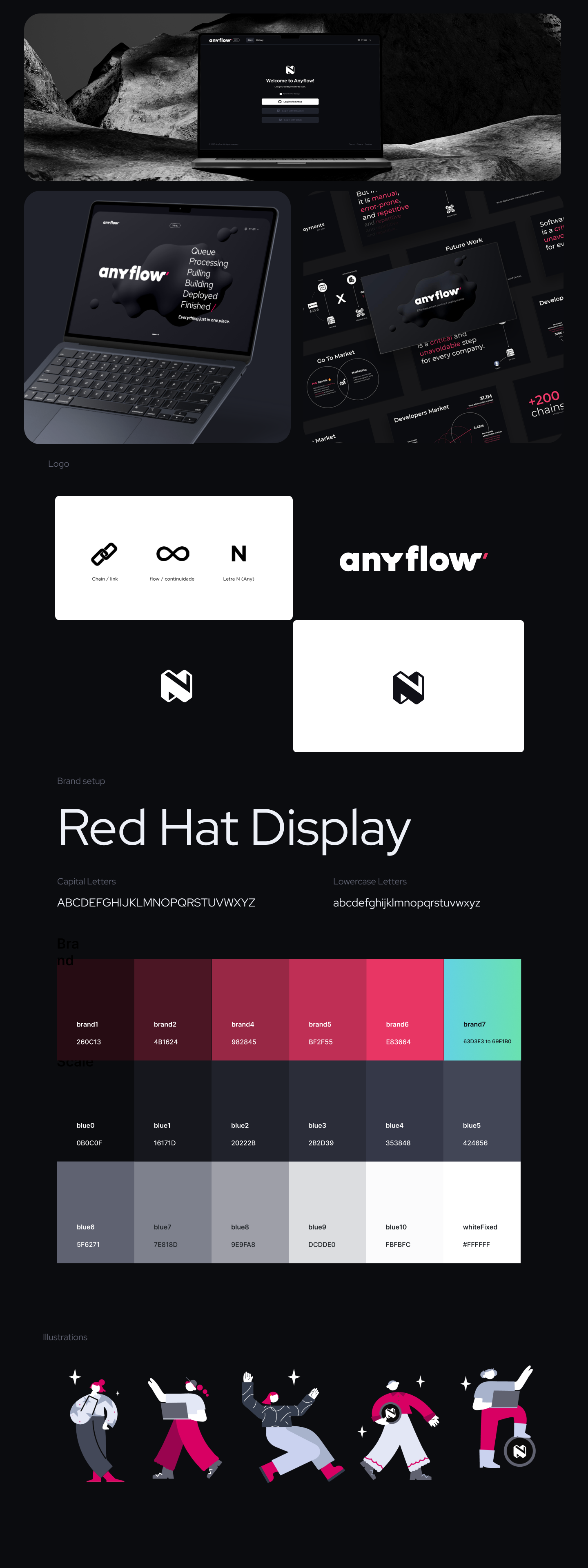
Aesthetics must foster trust: Designing for developers in a Web3 environment taught me that, for infrastructure tools, error prevention and status clarity matter far more than visual flair. The design needed to convey security, as a single wrong click comes at a high cost to the user.
Pragmatism over perfection: My biggest takeaway was negotiating scope with the engineering team. Condensing the workflow into fewer screens was a deliberate UX trade-off, but it ensured the development speed needed to launch on time. I learned firsthand that the best design is the one that actually reaches the market and delivers business value.
What's next, closing the DevOps cycle: The MVP focused exclusively on solving the immediate pain point of deployment. If the scope allowed, my next area of exploration would be the observability cycle (post-deployment monitoring dashboards) to complete the DevOps ecosystem within the platform. Looking further ahead, the goal is to evolve Anyflow into a comprehensive end-to-end tool for developers.
From handoff to a live product: I delivered the MVP in high fidelity along with the initial design system, and it was built and launched by the engineering team. After I left, the product kept evolving, with changes to the original scope. Watching that reinforced that a designer's role doesn't end at the approved screen, but at the solution that reaches users and stays alive without them.
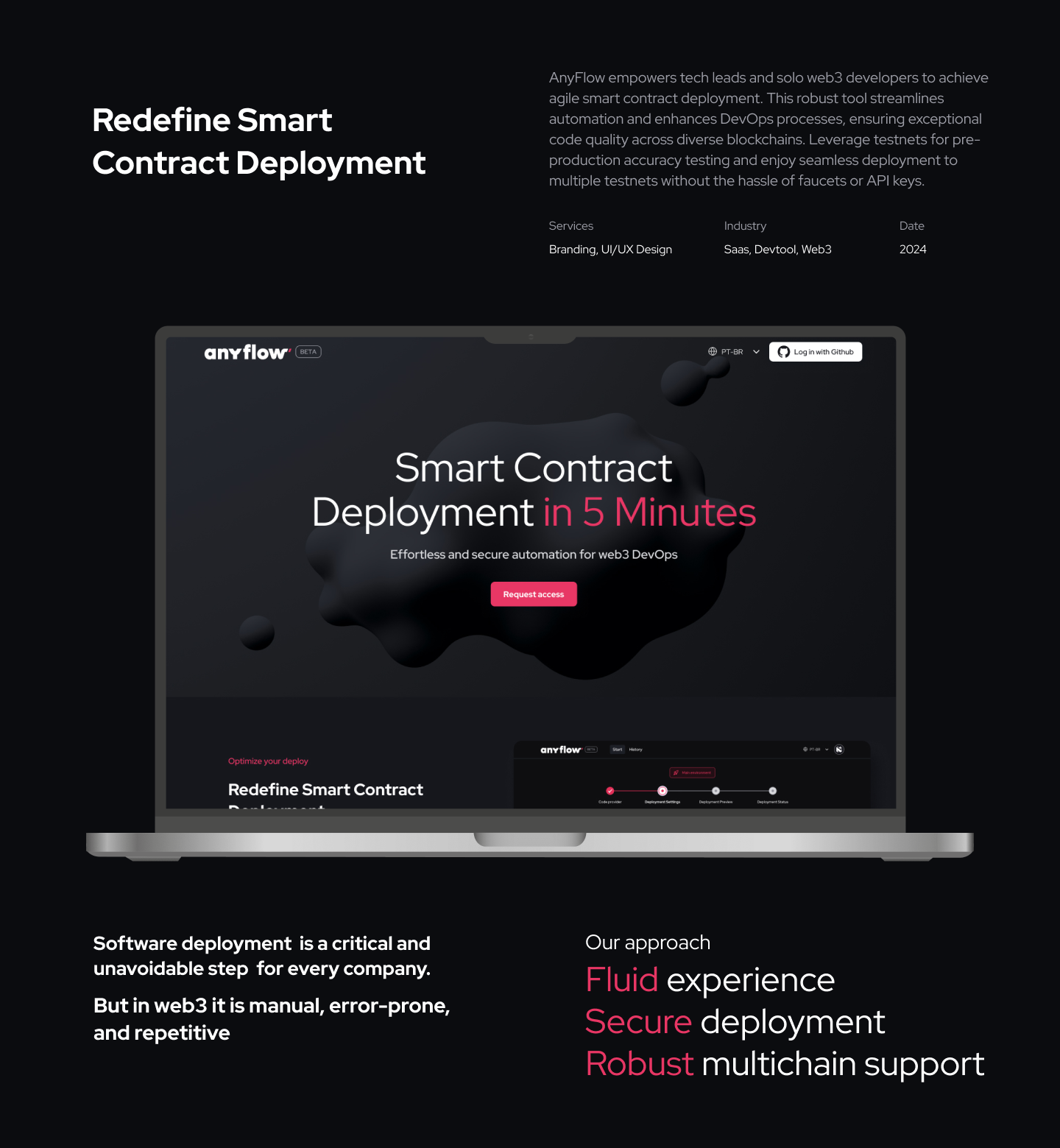
The product kept evolving after I left: the screens in this case study document the MVP I designed and delivered in 2024.